
Foot Conditions
Corn & Callus Treatment in Whitby
Corns and calluses develop when repeated pressure or friction causes the skin to thicken. They may be painless at first, but they can become tender, crack or keep returning if the underlying pressure is not addressed. A chiropodist at Brooklin Foot & Orthotic Clinic can safely assess the area, reduce painful thick skin and recommend ways to help prevent recurrence.
Quick answer: A corn is usually a smaller, concentrated area of thick skin—often over a bony part of a toe. A callus is usually broader and flatter and often develops under a weight-bearing area such as the ball or heel of the foot. Both form in response to repeated pressure or friction.
To schedule an appointment or for more information regarding our foot care services, please call us at 905-425-3338 or fill out the below form, and we will get back to you ASAP.
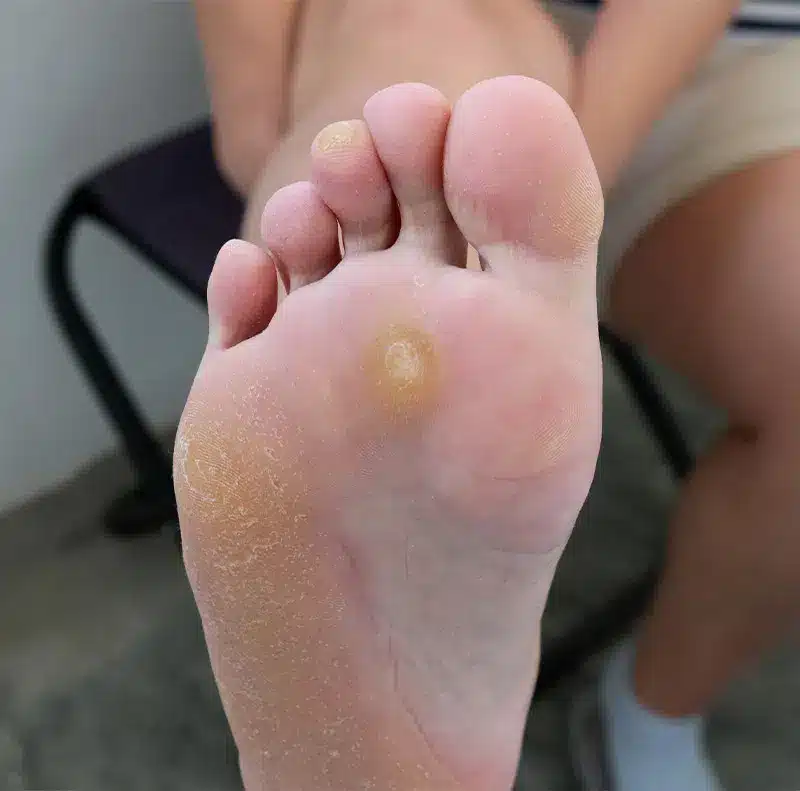
How can you tell a corn from a callus?
Corns often have a firm central core and may be painful when direct pressure is applied. They commonly develop on the tops or sides of toes or between toes. Calluses are generally wider areas of thickened skin and commonly develop beneath the forefoot, heel or another area that carries repeated load.
Not every hard or painful spot is a corn or callus. Plantar warts, foreign bodies and other skin conditions can look similar. A chiropodist can examine the area and recommend appropriate care.
Why do corns and calluses develop?
Shoes that are too tight, too loose or rubbing in one area
Toe deformities such as hammertoes or bunions
A bony prominence or joint alignment that concentrates pressure
Foot mechanics that overload the heel or ball of the foot
Reduced cushioning under the foot
Repeated standing, walking, sport or work-related pressure
Walking barefoot when it increases pressure or friction
If a corn or callus returns soon after it is reduced, the source of pressure may still be present. Treating the skin and the contributing pressure together can provide longer-lasting relief.
How a chiropodist can help
Your chiropodist will examine the skin and look for the pressure, footwear or structural factors contributing to the problem. Treatment may include:
Careful reduction of thickened skin using appropriate clinical instruments
Padding or offloading to reduce pressure on the tender area
Footwear advice based on the location of the corn or callus
Moisturizing recommendations for dry, thickened or cracked skin
Custom orthotics when pressure distribution or foot mechanics may be contributing
Ongoing monitoring when diabetes, poor circulation or reduced sensation increases risk
Safe care at home
Wear shoes and socks that fit well and do not rub the affected area.
Use a moisturizer recommended for your skin, but avoid applying cream between the toes unless directed by a healthcare provider.
Do not cut, shave or pick at a corn or callus yourself.
Avoid medicated corn pads or acid-based removers unless a qualified healthcare provider has confirmed they are safe for you.
Check the area regularly for redness, cracking, drainage or a wound.
If you have diabetes, poor circulation or reduced sensation: Do not self-treat a corn or callus. Even a small injury may be harder to feel or heal. Arrange a professional foot assessment before using a pumice stone, medicated pad, blade or other removal product.
When should a corn or callus be assessed?
Book an appointment if the area is painful, keeps returning, affects the way you walk, or you are unsure whether it is a corn, callus or wart. Seek prompt medical attention if there is broken skin, bleeding, drainage, increasing redness, warmth, swelling or other signs of a wound or infection—especially if you have diabetes or circulation problems.
Frequently asked questions about corns & calluses
What is the difference between a corn and a callus?
A corn is generally smaller and more concentrated, often with a firm centre over a bony area. A callus is usually broader and develops where pressure is spread across a larger surface, often under the foot.
Why does my corn or callus keep coming back?
Recurring thick skin usually means the pressure or friction that caused it is still present. Footwear, toe position, a bony prominence or the way pressure moves across your foot may need to be addressed.
Can I cut off a corn or callus at home?
No. Cutting or shaving the skin can cause injury or infection. This is particularly risky for anyone with diabetes, reduced circulation or reduced sensation.
Are corn-removal pads safe?
Many medicated corn products contain acid that can damage healthy skin. Ask a chiropodist or other qualified healthcare provider before using one, and do not self-treat if you have diabetes, poor circulation or reduced feeling in your feet.
Is a painful spot under my foot a callus or a plantar wart?
They can look similar, but they are different conditions and require different treatment. A chiropodist can examine skin lines, the pattern of pain and other clinical features to help identify the cause.
Do I need a referral for corn or callus treatment?
No. Brooklin Foot & Orthotic Clinic welcomes new patients and can be contacted directly for an appointment.
Relieve the pressure—not just the thick skin
Removing thick skin may provide temporary relief, but understanding why it formed can help reduce recurrence. Book a chiropody assessment in Whitby to address both the painful area and the pressure behind it. We serve Brooklin, Whitby, Ajax, Oshawa and communities across Durham Region.
Call 905-425-FEET (3338) or request an appointment online.
Written or clinically reviewed by Azar Ghafari, D.Ch. Last reviewed: Aug 6, 2026.

The Brooklin Foot Clinic offers the following Chiropody Services to the Durham region, including Ajax, Brock,
Clarington, Oshawa, Pickering, Scugog, Uxbridge and Whitby.
Our Location
16 Winchester Rd. E., Unit 3
Whitby, ON L1M 0K8
Ample parking • Wheelchair accessible
Serving Brooklin, Whitby, Ajax, Oshawa and the Durham Region
Operation Hours
Monday 9am - 7pm
Tuesday 9am - 7pm
Wednesday 9am - 7pm
Thursday 9am - 7pm
Friday 10am - 7pm
Saturday 9am - 5pm
CONNECT WITH US
