
When Should You See a Chiropodist?
7 Foot Symptoms Worth Checking
When Should You See a Chiropodist? 7 Foot Symptoms Worth Checking
Numbness, Tingling or Burning in Your Feet
A Cut, Blister or Sore That Is Not Healing Normally
Swelling That Appears Unexpectedly or Keeps Returning
One Foot Changes Colour or Feels Colder Than the Other
Foot or Leg Pain That Follows a Predictable Walking Pattern
Skin or Nail Changes That Are Not Clearing Up
You Feel Less Steady or Have Changed the Way You Walk
What Can a Chiropodist Learn From Your Feet?
How to recognize foot symptoms that need professional attention—and when the symptoms may require urgent medical care
Most of us pay little attention to our feet until something hurts. Yet your feet contain a complex network of bones, joints, muscles, nerves, skin and blood vessels. A change in how they look, feel or function may begin in the foot itself—but it can also provide an early clue that something else deserves attention.
That does not mean every cold toe, sore heel or swollen ankle signals a serious problem. Foot symptoms can have straightforward causes, including footwear, increased activity or a minor injury. What matters is whether the change is new, persistent, recurring, worsening or affecting your ability to stay active.
Quick answer: Consider seeing a chiropodist if foot symptoms such as numbness, swelling, skin or nail changes, wounds, balance problems, or walking difficulties persist, recur, or interfere with daily life. Some concerns can be treated through chiropody care, while others may require referral to your family doctor or urgent medical attention.
Here are seven foot symptoms worth checking—and how a chiropodist may help identify the appropriate next step.
1. Foot Symptoms: Numbness, tingling or burning in your feet
Temporary pins and needles after sitting awkwardly usually disappear once you change position. Numbness, tingling, burning or unusual sensitivity that continues or regularly returns is different.
These sensations can occur when a nerve is irritated or compressed in the foot or elsewhere along the nerve pathway. They may also be associated with peripheral neuropathy, which has several possible causes, including diabetes.
Reduced sensation is important because pain is one of the ways your body alerts you to injury. If sensation is diminished, you may not notice:
- A blister caused by footwear
- A cut or crack in the skin
- Pressure beneath the foot
- An object inside your shoe
- Exposure to a surface or water that is too hot.
A minor problem may worsen before you realize it is there.
What can a chiropodist assess?
A chiropodist may test sensation, examine the feet for unnoticed injuries, assess footwear pressure and look for clinical indicators related to circulation. The findings can help determine whether treatment falls within chiropody care or whether further medical investigation is appropriate.
Do not assume reduced feeling is simply part of getting older. Persistent or recurring numbness deserves an assessment.
2. A cut, blister or sore that is not healing normally
A small break in the skin may not look serious, but pressure, friction, infection, circulation and sensation all affect how well a foot injury heals.
Shoes may continue rubbing the same area. A crack can create an opening for infection. A sore beneath the foot may worsen because it receives pressure every time you stand or walk.
This is particularly important for people living with diabetes. Diabetes can affect nerve function and circulation, making injuries more difficult to feel and potentially slower to heal.
Contact a healthcare professional promptly if a wound:
- Is not clearly improving
- Becomes red, warm or swollen
- Produces discharge or an unpleasant odour
- Changes colour or appearance
- Is located in an area with reduced sensation
- Develops when you have diabetes or a known circulation problem.
If you have diabetes, reduced sensation or poor circulation, do not cut away damaged skin or use medicated corn or wart treatments without professional guidance. Similar-looking conditions may require very different care, and some over-the-counter products can damage healthy skin.
What can a chiropodist assess?
A chiropodist can evaluate the wound, sensation, circulation indicators and the pressure contributing to the problem. Care may include wound management, pressure relief, footwear recommendations and coordination with other healthcare professionals when needed.
Learn more about diabetic foot care and wound management at Brooklin Foot & Orthotic Clinic.
3. Swelling that appears unexpectedly or keeps returning
Feet and ankles may swell after prolonged sitting, hot weather, an unusually active day or spending hours on your feet. Mild swelling that affects both sides and resolves may not indicate a serious concern.
Swelling deserves closer attention when it:
- Begins suddenly
- Primarily affects one foot or leg
- Is accompanied by pain, warmth or redness
- Continues despite rest
- Repeatedly returns
- Follows an injury and makes it difficult to bear weight.
There are many possible causes, ranging from a foot or ankle injury to problems involving veins, medication or fluid retention. The pattern of the swelling and any accompanying symptoms help determine what type of care is needed.
What can a chiropodist assess?
A chiropodist can examine the foot and ankle, look for signs of injury or inflammation and assess clinical indicators related to circulation. If the findings suggest a concern outside the scope of chiropody, you may be referred to your family doctor or another healthcare professional.
Assess sudden pain and swelling in one leg promptly. If leg swelling occurs with chest pain, faintness or sudden shortness of breath, call 911.
4. One foot changes colour or feels colder than the other
Both feet may feel cold because of the weather, a cool floor or the footwear you are wearing. A persistent difference between your two feet can be more significant.
One foot that remains noticeably colder than the other—or skin that becomes unusually pale, bluish or discoloured—may be associated with reduced blood flow.
Other changes that can sometimes occur with circulation problems include:
- Foot, calf or leg pain during walking
- Wounds that heal slowly
- Shiny or unusually thin-looking skin
- Reduced hair growth on the feet or lower legs
- Numbness or weakness.
These symptoms do not confirm a circulation disorder, but they should not be ignored.
What can a chiropodist assess?
A chiropodist may examine skin colour and temperature, check pulses in the feet, review healing and assess other clinical indicators of circulation. If more detailed vascular testing is needed, they can recommend an appropriate medical referral.
If a foot suddenly becomes cold, pale or blue and is also painful or numb, seek emergency medical care.
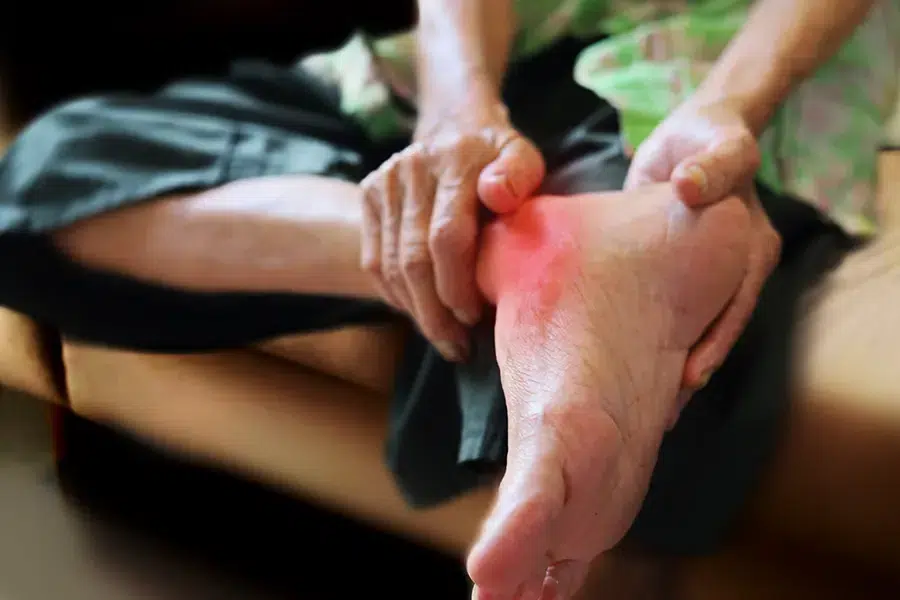
5. Foot or leg pain that follows a predictable walking pattern
Sore feet after an unusually long walk may simply mean you have done more activity than your body is accustomed to. Pain that repeatedly begins after walking approximately the same distance deserves a closer look—particularly when it improves after you stop.
This discomfort may be related to muscles, joints, nerves, foot mechanics or circulation. Pain associated with reduced blood flow is often experienced as cramping or aching in the calf, although it may also affect the foot, thigh or hip.
Before your appointment, make a note of:
- Where the discomfort begins
- What the pain feels like
- How long or how far you walk before it starts
- Whether stopping relieves it
- Whether one side is consistently worse
- Whether you also notice weakness, numbness or temperature changes.
What can a chiropodist assess?
A chiropodist can examine joint movement, foot structure, biomechanics, gait, nerve-related symptoms and circulation indicators. This can help distinguish between possible causes and determine whether treatment, footwear changes, orthotics or further medical investigation may be appropriate.
The pattern is often as important as the pain itself. The more clearly you can describe what triggers the discomfort, the more useful the assessment can be.
6. Skin or nail changes that are not clearing up
Many foot conditions look similar at first glance.
A thick, yellow or discoloured toenail may be caused by a fungal infection, repeated footwear pressure, a previous injury or another nail condition. Itching and peeling could indicate a fungal infection, but dryness and other skin conditions can produce similar symptoms.
Even a painful spot beneath the foot can be difficult to identify without an examination. Corns, calluses, plantar warts and foreign objects can sometimes be mistaken for one another.
Consider having the area assessed if you notice:
- A nail changing rapidly without an obvious injury
- Persistent redness or swelling around a nail
- Skin that repeatedly cracks or bleeds
- Itching, peeling or irritation that spreads
- A dark mark or streak that is new or changing
- A painful thickened area that keeps returning
- A condition that has not improved with appropriate home care.
What can a chiropodist assess?
A chiropodist can examine the skin or nail, distinguish between conditions with similar appearances and identify pressure or footwear factors that may be contributing to the problem.
An accurate assessment can save you from repeatedly treating the wrong condition and help reduce the likelihood of it returning.
Learn more about treatment for foot skin and nail conditions, corns and calluses and ingrown toenails.
7. You feel less steady or have changed the way you walk
Balance depends on several systems working together, including vision, the inner ear, muscles, joints and the sensory information travelling from your feet to your brain.
Foot pain may cause you to shorten your stride or shift weight to the opposite side. Reduced sensation can make it harder to feel the floor. Weakness, restricted joint movement and unstable footwear can also affect confidence and balance.
If you have recently started stumbling, avoiding stairs, walking more cautiously or feeling less secure on your feet, consider what may have changed.
What can a chiropodist assess?
A foot-focused assessment may include:
- Areas of pain or pressure
- Sensation in the feet
- Joint movement
- Foot and lower-leg strength
- Footwear fit and stability
- Foot structure and biomechanics
- Changes in your gait.
Depending on the findings, your chiropodist may recommend treatment, footwear changes, exercises, orthotics or further assessment by another healthcare professional.
What can a chiropodist learn from your feet?
Chiropodists are regulated healthcare professionals who assess, diagnose and treat a broad range of medical conditions of the foot. Depending on your concern, an assessment may include an examination of the feet and lower extremities, neurological testing, vascular assessment, gait analysis and biomechanical evaluation.
Your feet alone cannot diagnose heart disease, diabetes, kidney disease or another systemic medical condition. However, a chiropodist may identify changes that should be investigated further and recommend that you speak with your family doctor or another healthcare provider.
Recognizing what can be treated through chiropody—and what may require broader medical attention—is an important part of protecting your health.
Where should you seek care?
Book a chiropody assessment for:
- Persistent or recurring foot pain
- Corns, calluses or nail problems
- Numbness, tingling or burning
- A wound that is not healing normally
- Skin or nail changes
- Changes in balance or walking
- Foot concerns associated with diabetes
- Footwear-related pain or pressure.
Seek prompt medical attention for:
- Sudden swelling, redness, warmth or pain in one leg
- A rapidly worsening wound
- Signs of a spreading infection
- New or rapidly worsening loss of sensation
- A hot, red and swollen foot—particularly with diabetes or reduced sensation.
If you have diabetes or reduced sensation and one foot becomes noticeably warmer, redder or more swollen than the other, seek professional medical assessment promptly—even if it is not particularly painful.
Call 911 if:
- A foot suddenly becomes cold, pale or blue and feels painful or numb
- Leg swelling occurs with chest pain, faintness or sudden shortness of breath.
Make checking your feet part of your health routine
You do not need special equipment to monitor your feet. In good light, compare both feet and examine the tops, soles, heels and spaces between your toes. Use a mirror or ask someone to help if the bottoms are difficult to see.
Look for:
- New redness, swelling or discolouration
- Blisters, cracks, cuts or pressure marks
- Sores that are not healing
- Changes in temperature or sensation
- New pain or tenderness
- Changes in your skin or toenails
- Differences in the way you stand or walk.
How frequently you should check depends on your health and risk factors. People living with diabetes should inspect their feet every day because nerve damage can allow a problem to progress without producing obvious pain.
Frequently Asked Questions
When should I see a chiropodist?
Consider seeing a chiropodist when foot pain, numbness, swelling, wounds, skin or nail changes, balance problems or walking difficulties persist, recur or affect your daily activities. You can also book preventive foot care if you have diabetes, reduced sensation or another condition that increases your risk of foot complications.
What foot problems can a chiropodist diagnose and treat?
Chiropodists assess and treat a broad range of foot conditions, including heel and arch pain, bunions, ingrown toenails, corns, calluses, plantar warts, fungal nail concerns, diabetic foot complications and problems involving foot structure or function.
Should I see a chiropodist or my family doctor for foot pain?
A chiropodist is often an appropriate first choice when the problem appears to involve the foot, skin, toenails, footwear, joints or biomechanics. If the assessment suggests a broader medical condition or requires testing outside the scope of chiropody, you may be referred to your family doctor or another healthcare professional.
Can a chiropodist assess numbness or tingling in my feet?
Yes. A chiropodist can assess sensation, examine your feet for unnoticed injuries and consider possible foot-related causes. Persistent numbness or tingling may also require investigation for diabetes, nerve compression or another medical condition.
Can a chiropodist check circulation in my feet?
A chiropodist can assess clinical indicators associated with circulation, including foot temperature, skin colour, healing, pulses and walking-related symptoms. If the findings suggest a vascular concern, they may recommend additional testing or referral.
Is foot pain a normal part of aging?
Foot problems may become more common with age, but ongoing pain should not automatically be accepted as normal. Arthritis, changes in the natural padding beneath the foot, reduced joint movement, circulation concerns, footwear and other potentially treatable factors can all contribute.
What foot symptoms require urgent medical attention?
Seek prompt medical care for a rapidly worsening wound, spreading redness, sudden swelling in one leg, or a hot and swollen foot—especially if you have diabetes. Call 911 if a foot suddenly becomes cold, pale or blue and painful or numb, or if leg swelling occurs with chest pain or sudden shortness of breath.
How often should someone with diabetes have their feet checked?
People living with diabetes should check their feet every day for cuts, cracks, blisters, sores, redness, swelling or other changes. Professionals should perform foot examinations at least annually, and more often if neuropathy, circulation concerns, wounds, or other risk factors are present.
Can I treat a corn, callus or wart myself?
It is best to confirm what the condition is before treating it. Corns, calluses and plantar warts can look similar but require different approaches. People with diabetes, reduced sensation or poor circulation should not use medicated corn or wart treatments without professional advice.
Do I need a referral to see a chiropodist in Whitby?
No. You can book directly with Brooklin Foot & Orthotic Clinic. New patients from Brooklin, Whitby, Ajax, Oshawa and across Durham Region are welcome without a doctor’s referral.
Take the next step toward healthier feet
A change in your feet does not always mean something serious. But when a symptom is new, persistent or affecting your mobility, understanding what is causing it can help you take the right next step.
Brooklin Foot & Orthotic Clinic provides chiropody assessments and treatment for patients from Brooklin, Whitby, Ajax, Oshawa and across Durham Region.
Call 905-425-FEET (3338) or request an appointment online.
Clinically reviewed by Janet Yu, D.Ch., Lead Chiropodist. Last reviewed: August 2026.

New patients are welcome. No referrals are required.
The Brooklin Foot & Orthotic Clinic team commonly treat the following: Heel and Arch Pain, Achilles problems, ball-of-foot pain, arthritic feet, bunions, children’s feet, and knee and ankle pain.

The Brooklin Foot Clinic offers the following Chiropody Services to the Durham region, including Ajax, Brock,
Clarington, Oshawa, Pickering, Scugog, Uxbridge and Whitby.
Our Location
16 Winchester Rd. E., Unit 3
Whitby, ON L1M 0K8
Ample parking • Wheelchair accessible
Serving Brooklin, Whitby, Ajax, Oshawa and the Durham Region
Operation Hours
Monday 9am - 7pm
Tuesday 9am - 7pm
Wednesday 9am - 7pm
Thursday 9am - 7pm
Friday 10am - 7pm
Saturday 9am - 5pm
CONNECT WITH US
