Back in Boots:
Is Your Fall Footwear Helping or Hurting Your Feet?
Before you zip up last year’s favourites, give your feet a little say in the matter.
The first cool morning arrives. Out come the sweaters, the jackets—and the boots waiting at the back of the closet.
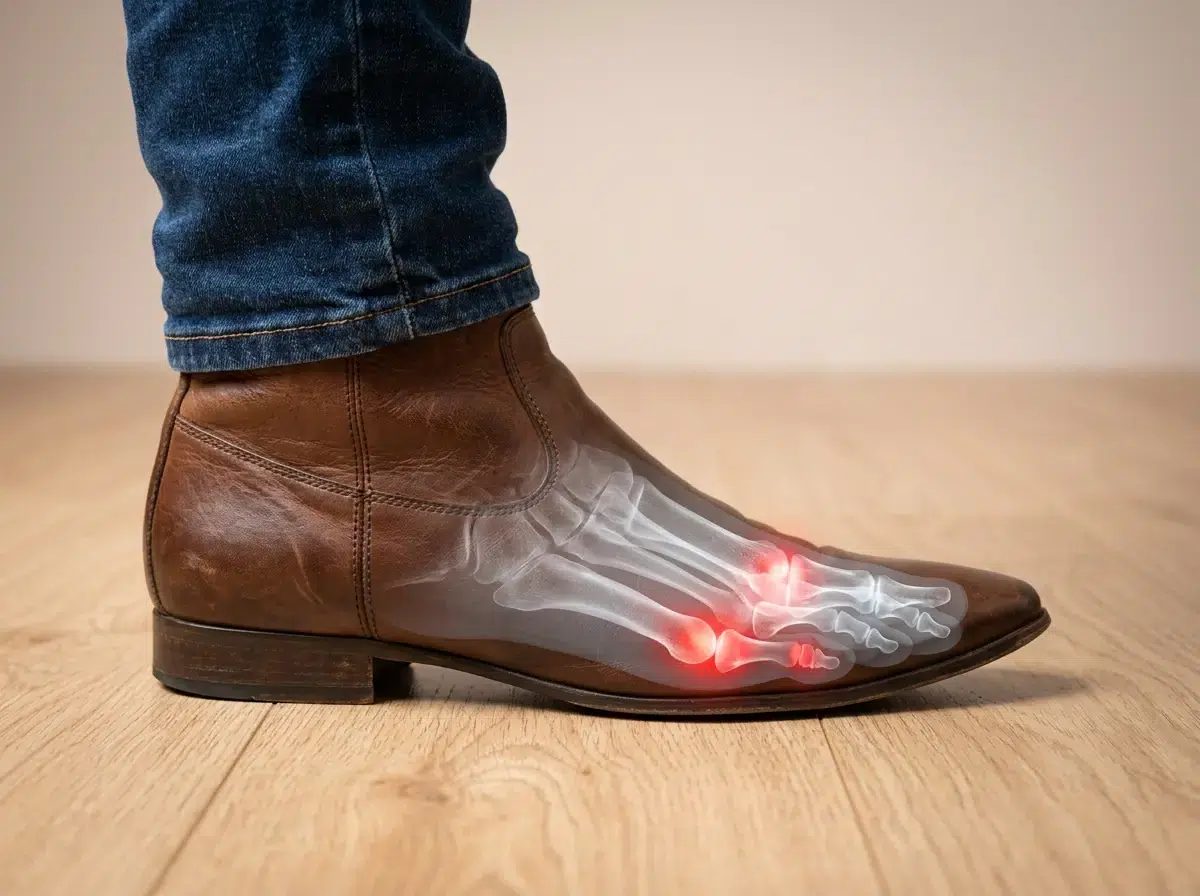
They still look good. But by mid-afternoon, your little toe is protesting, your bunion feels squeezed, or you’re watching the clock until you can take them off.
Sound familiar? Foot pain from boots often shows up as soon as the weather turns.
Fall changes what we ask of our footwear. One pair may need to handle the commute, school pickup, damp sidewalks and a weekend walk—often with thicker socks. Whether you’re heading to work in Oshawa, running errands in Whitby or enjoying a fall outing in Uxbridge, comfort deserves a place on the checklist.
A good fall boot gives your toes room, holds your foot securely and suits the walking or standing you actually do. Pinching, rubbing and recurring pain are reasons to reassess the fit. Poorly fitting footwear can add stress to your feet and make everyday activities harder than they need to be.
Why do my feet hurt when I switch back to boots?
Boots can aggravate foot problems when they squeeze the toes or press on sensitive areas. A sore bunion, corn or toenail becomes harder to ignore inside a restrictive toe box. Tight footwear can also worsen an ingrown toenail by pressing against the toe and nail.
Socks matter more than people expect. Boots that felt comfortable with thin socks may fit differently with a warmer pair, so try them on with the socks you intend to wear.
Ask yourself: What changed when the discomfort started? Different boots? Thicker socks? Longer walks? Those details can help a chiropodist understand the problem—though footwear is not always the only cause.
Five footwear mistakes worth catching this fall
1. Trusting the size label more than the fit
Your usual size is a starting point, not a guarantee. The real test is how the boot feels when you stand and walk.
Check three things:
- Length: Aim for about 1 cm between your longest toe and the front of the boot.
- Width: Your toes should not be squeezed together.
- Depth: The upper should not press down on the tops of your toes.
A boot can be long enough and still too narrow or shallow.
2. Treating pain as part of “breaking them in”
“They’ll stretch.”
Maybe. But that’s a gamble when they already hurt.
Do not rely on breaking in boots that pinch or feel wrong when you try them on. Walk around indoors before committing, and know the retailer’s return policy.
If they’re uncomfortable in the store, leave them there.
3. Choosing a heel your day can’t accommodate
A boot for a short dinner serves a different purpose than one you’ll wear through hours of standing or walking.
Higher heels shift pressure to the ball of the foot, especially with a pointed toe. For everyday wear, consider a lower heel and enough room across the forefoot.
Shop for the day you’ll actually have—not just the outfit you’ve planned.
4. Assuming your orthotics will fit any pair
If you wear orthotics, bring them when you go boot shopping.
A removable insole can create space, but you still need to check the full fit with your orthotics inside. Your toes shouldn't feel crowded, and your foot should stay secure.
At Brooklin Foot & Orthotic Clinic, we prescribe custom-made orthotics after an assessment that considers your feet, activities and footwear. Bring your boots to your appointment so we can look at the fit together.
5. Asking one pair to do every job
Think about where your boots will spend most of their time: at a desk, on a worksite, on paved sidewalks or on a muddy trail.
Choose footwear for the activity and conditions. Weather protection matters, but warmth alone does not make a boot right for your feet.
The front-door boot check
Before heading out, take a moment to check:
- Your socks: Are these the ones you tested the boots with?
- Your toes: Can they move without being squeezed?
- Your fastening: Does it hold your foot securely without uncomfortable pressure?
- Your first few steps: Is anything pinching or rubbing?
Also check last year’s boots for worn tread, uneven heel wear, and damaged linings.
Adjustable fastenings, such as laces, can help secure the boot while allowing room at the front. Don’t let the morning rush be your only fitting appointment. Give yourself a minute to notice how the boots feel.
Bunions and boots: give the joint room
If the side of your big-toe joint becomes sore inside your boots, look closely at the toe-box shape.
A wider toe box can reduce pressure on a bunion. It will not reverse the bunion, but properly fitting footwear can help manage discomfort.
For more on changes worth watching, read Is My Bunion Getting Worse?.
When should you see a chiropodist?
Book an assessment if foot pain keeps returning, worsens, or changes how you walk or what you can do. Tingling or reduced sensation also deserves attention. Heel pain can have several causes, and a different pair of boots may not fix the underlying problem.
If you have diabetes, don’t wait for a footwear problem to become painful. Check your feet daily for blisters, cuts, sores and other changes. Contact your doctor or foot specialist the same day if you notice a new wound or your foot becomes red, warm or swollen—even if it doesn’t hurt.
Seek urgent medical care for severe pain after an injury or an inability to bear weight.
Frequently asked questions about bunions
Should fall boots feel tight at first?
They should feel secure without pinching or squeezing. Don’t assume painful boots will become comfortable with wear. Check them while standing and walking before deciding to keep them.
Can boots make bunion pain worse?
Yes. Boots that press against the big-toe joint can aggravate bunion discomfort. Look for a toe box that fits your foot’s shape without compressing the joint.
Can I wear custom orthotics in boots?
Often, as long as the boots accommodate them properly. Bring your orthotics when trying on boots and check the fit with them in place. A removable insole can help create space.
Are flat boots always better for your feet?
No. A flat sole alone does not guarantee a good fit. Room, support and suitability for your activities matter too. Footwear that is too tight, too loose or insufficiently supportive can cause problems regardless of style.
Do I need a referral to visit Brooklin Foot & Orthotic Clinic?
No referral is required, and we welcome new patients. Contact the clinic to arrange an assessment, and bring the footwear connected with your discomfort.
Enjoy the season—without counting down to taking your boots off
Fall has plenty to offer. Your footwear should not be the reason you head home early.
Brooklin Foot & Orthotic Clinic is located in Brooklin, within Whitby, and welcomes patients from across Durham Region, including Ajax, Brock, Clarington, Oshawa, Pickering, Scugog and Uxbridge.
If your boots are making everyday activities uncomfortable, bring them along. Our chiropodists can assess your concerns and help you understand your footwear and treatment options.
Call 905-425-FEET (3338) or request an appointment online.
This article provides general information and does not replace an individual assessment.
Clinically reviewed by Janet Yu, D.Ch., Lead Chiropodist. Published October 2026.

New patients are welcome. No referrals are required.
The Brooklin Foot & Orthotic Clinic team commonly treat the following:
Heel and Arch Pain, Achilles problems, ball-of-foot pain, arthritic feet, bunions, children’s feet, and knee and ankle pain.
The Brooklin Foot Clinic offers the following Chiropody Services to the Durham region, including Ajax, Brock,
Clarington, Oshawa, Pickering, Scugog, Uxbridge and Whitby.
Our Location
16 Winchester Rd. E., Unit 3
Whitby, ON L1M 0K8
Ample parking • Wheelchair accessible
Serving Brooklin, Whitby, Ajax, Oshawa and the Durham Region
Operation Hours
Monday 9am - 7pm
Tuesday 9am - 7pm
Wednesday 9am - 7pm
Thursday 9am - 7pm
Friday 10am - 7pm
Saturday 9am - 5pm
CONNECT WITH US
